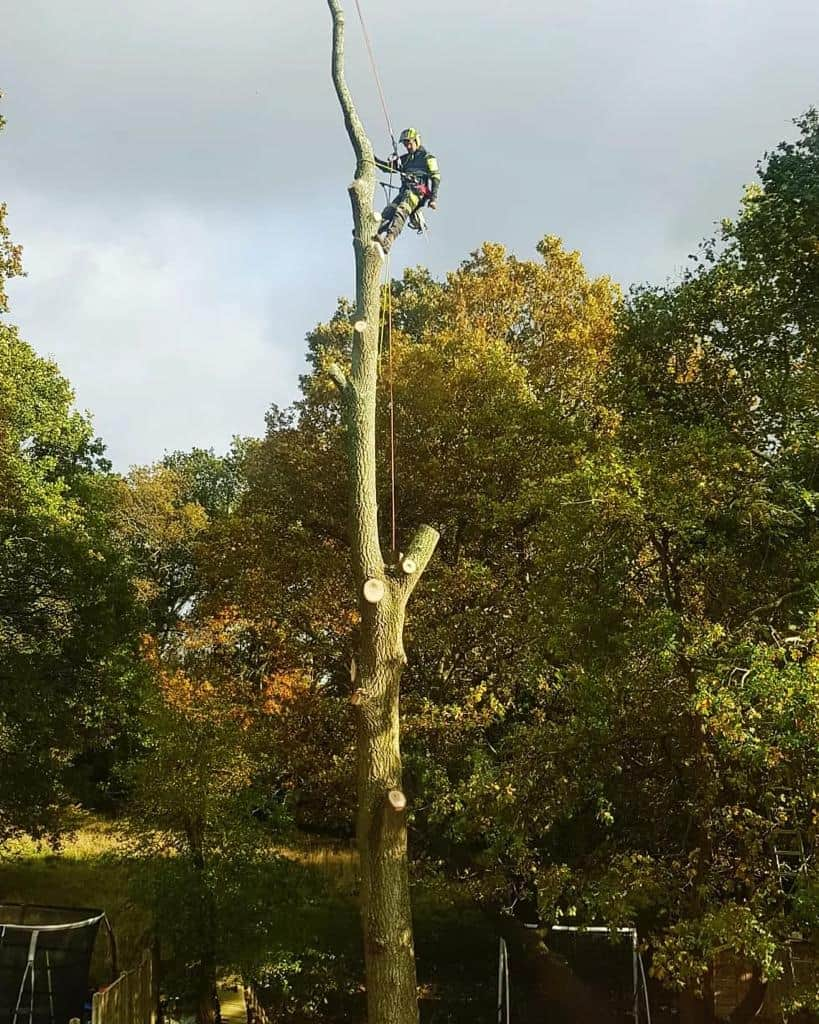
Large trees can become an important feature of a garden, providing shade, structure and visual interest. However, as trees mature, their crowns can sometimes become too large for the available space. Overextended branches, excessive height or dense growth may make a tree more difficult to manage.
Crown reduction is one form of professional tree surgery that can help carefully reduce the overall size and spread of a suitable tree. For property owners in Leatherhead, Surrey, understanding how crown reduction works can help determine when professional tree care may be appropriate.
What Is Crown Reduction?
Crown reduction involves selectively reducing the height and spread of a tree’s crown while retaining its natural shape and structure.
Rather than simply cutting the top or removing large sections of the canopy, a properly planned reduction involves shortening selected branches throughout the crown. This helps create a more balanced result and avoids concentrating cuts in one particular area.
The amount of reduction should be carefully considered based on the tree’s species, condition, structure and surroundings.
Why Do Large Trees Sometimes Need Crown Reduction?
As trees grow, their branches can extend further into surrounding spaces. A tree that was once appropriately sized for its location may eventually become too large for the available area.
Crown reduction may be considered when:
- The tree has become excessively large for its surroundings
- Branches are extending towards buildings or other structures
- The crown is spreading into areas where space is limited
- The overall shape has become difficult to manage
- A reduction in height or spread is considered appropriate for the tree
The aim is not simply to make the tree smaller. The work should maintain a suitable structure while reducing excessive growth.
How Does Crown Reduction Help Manage Overgrown Trees?
A carefully carried out crown reduction can bring an overgrown tree back to a more manageable size. By selectively shortening suitable branches throughout the crown, the overall dimensions can be reduced without removing the entire canopy.
This can also help improve the balance of the tree where certain areas have developed excessive growth.
However, crown reduction should not involve excessive cutting. Removing too much foliage can place unnecessary stress on a tree and may encourage vigorous or poorly attached regrowth.
Crown Reduction vs Tree Topping
Crown reduction should not be confused with indiscriminate tree topping. Topping involves cutting branches back heavily, often leaving large stubs and significantly altering the natural form of the tree.
Professional crown reduction takes a more selective approach. Branches are shortened at suitable points to maintain a natural appearance and reduce the overall crown in a controlled way.
This distinction is important when choosing tree surgery for a large or overgrown tree.
What Trees Can Be Reduced?
Not every tree is suitable for crown reduction. The species, age, health, existing structure and location all need to be considered.
Some trees may respond poorly to significant reductions, while others may be suitable for carefully managed crown work.
A professional assessment should therefore be carried out before deciding whether crown reduction is appropriate. This allows the tree’s current condition and growth pattern to be considered rather than applying the same approach to every tree.
Why Professional Crown Reduction Matters
Large trees require careful planning because branches can be heavy, extensive and difficult to access safely. Poorly positioned cuts or excessive removal can affect the tree’s structure and future growth.
A professional tree surgeon can assess the tree before work begins and determine which branches should be reduced and how much growth can reasonably be removed.
The work can then be carried out with the aim of maintaining a balanced crown and preserving the tree’s natural appearance.
Signs an Overgrown Tree May Need Assessment
A tree may benefit from professional assessment when its crown has become noticeably larger or more difficult to manage.
Potential signs include:
- Branches extending significantly beyond their previous position
- Excessive growth close to buildings
- A noticeably unbalanced crown
- Branches becoming crowded or crossing
- The tree occupying more space than intended
- Concerns about its overall size or structure
These signs do not automatically mean that crown reduction is required. An inspection can help determine the most suitable form of tree maintenance.
Crown Reduction in Leatherhead, Surrey
For property owners in Leatherhead, Surrey, professional crown reduction can provide a considered approach to managing suitable large and overgrown trees.
NS Tree Surgery Leatherhead can assess individual trees and advise on whether crown reduction is appropriate based on their size, condition, structure and surroundings.
Careful tree surgery can help maintain a manageable crown while retaining the natural character of the tree.
Conclusion
Crown reduction can be an effective way of managing suitable large or overgrown trees by carefully reducing their height and spread. The technique focuses on selective branch reduction rather than excessive cutting, helping to preserve a balanced and natural crown.
Because every tree has different requirements, professional assessment is important before any significant crown work is undertaken.
If you have a large or overgrown tree in Leatherhead, Surrey, contact NS Tree Surgery Leatherhead to discuss your requirements and arrange a professional tree assessment.
Call us on: 01372 679 098
Click here to find out more about NS Tree Surgery Leatherhead
Click here to complete our contact form and see how we can help with your tree needs.